

Hiring efficiently has become one of the biggest challenges for recruitment teams today. Recruiters are expected to handle high application volumes, move candidates through the pipeline quickly, and still maintain hiring quality. Manual processes make this difficult.
Take Ahmed, an HR manager at a mid-sized GCC company managing recruitment across sales, operations, and support teams. His recruiters were spending hours sorting resumes, updating spreadsheets, coordinating interviews, and following up with candidates manually. As hiring demands increased, the process became slower and harder to manage.
This is where an applicant tracking system makes a real difference.
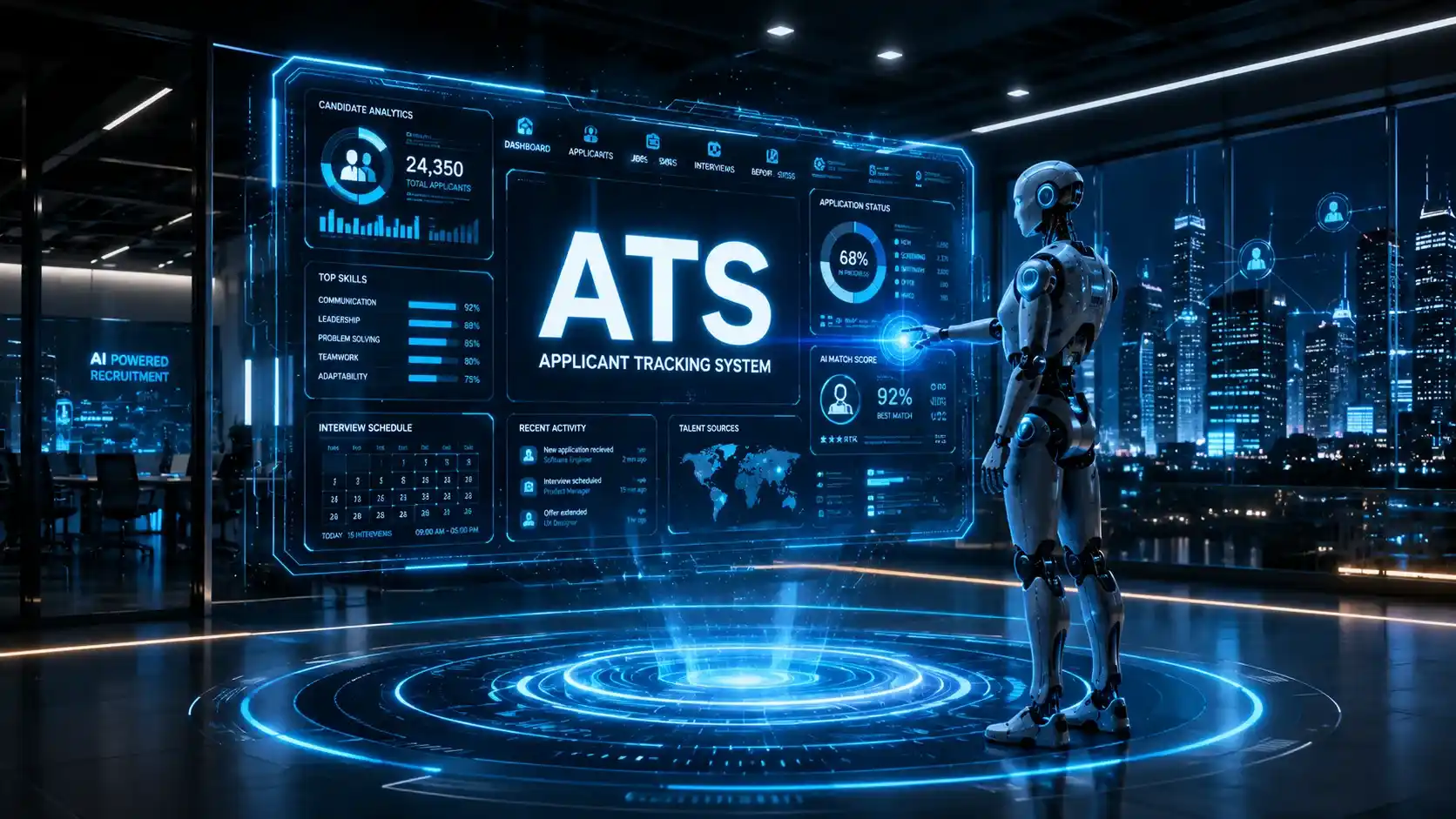
An applicant tracking system helps businesses organize hiring workflows, automate repetitive recruitment tasks, and improve visibility across the entire hiring process. Instead of relying on scattered tools and manual coordination, recruiters can manage applications, interviews, communication, and hiring data in one centralized system.
An applicant tracking system is software designed to simplify and manage recruitment processes more efficiently.
A modern recruitment application tracking system helps recruiters collect applications, screen candidates, track hiring progress, schedule interviews, and manage communication from a single platform.
For Ahmed’s team, this removed the need to constantly switch between spreadsheets, email threads, and disconnected tools. Candidate information stayed organized, hiring progress became easier to track, and recruiters spent less time on administrative work.
An ATS for recruitment is not just about storing resumes. It improves how recruiters manage the entire hiring workflow.
Slow hiring creates multiple problems for businesses.
Strong candidates often leave the process if communication takes too long. Recruiters become overwhelmed by repetitive tasks, and hiring managers lose visibility into recruitment progress.
In fast-moving industries, hiring delays directly affect business operations.
Ahmed noticed that even qualified candidates were dropping off simply because interview scheduling and resume screening were taking too long. The recruitment team was busy, but not necessarily productive.
Improving hiring efficiency means reducing unnecessary delays while helping recruiters focus more on evaluating talent.
One of the biggest advantages of an applicant tracking system is centralized hiring management.
Instead of managing resumes and candidate updates manually, recruiters can view every application, stage update, and communication history in one dashboard. This creates a more organized workflow and reduces confusion during high-volume hiring.
Resume screening also becomes significantly faster.
An ATS for recruitment can automatically filter resumes based on skills, qualifications, and job relevance. Instead of manually reviewing hundreds of applications, recruiters can quickly focus on the most suitable candidates.
For Ahmed’s team, this reduced screening time dramatically and allowed recruiters to move candidates through the process much faster.
Interview coordination also improves with automation.
Scheduling interviews manually often creates unnecessary delays. A recruitment application tracking system can sync calendars, automate reminders, and simplify communication between recruiters, hiring managers, and candidates.
This keeps hiring processes moving without endless email coordination.
Candidate tracking becomes difficult when hiring teams rely on spreadsheets or disconnected systems.
An applicant tracking system improves visibility by showing exactly where every candidate stands in the hiring process. Recruiters can monitor application stages, interview feedback, and communication history without searching through multiple tools.
This reduces the chances of losing strong candidates due to disorganization or delayed follow-ups.
For growing companies handling multiple open positions at once, this level of visibility becomes essential.
Recruiters spend a surprising amount of time on repetitive administrative tasks.
Updating candidate records, sending interview reminders, organizing resumes, and managing hiring updates all consume valuable time.
An ATS for recruitment automates many of these tasks.
Instead of spending hours on coordination, recruiters can focus more on candidate evaluation, hiring strategy, and collaboration with hiring managers.
For Ahmed’s team, automation reduced operational workload while improving overall recruitment speed.
Hiring efficiency does not only affect recruiters. It also affects candidates.
Delayed communication and disorganized processes create poor candidate experiences, which can damage employer reputation and reduce offer acceptance rates.
An applicant tracking system improves candidate experience by keeping communication faster, more consistent, and more organized.
Candidates receive timely updates, smoother scheduling experiences, and clearer hiring timelines.
This creates a more professional recruitment process overall.
Modern recruitment application tracking systems also provide valuable recruitment insights.
Recruiters can track metrics like time to hire, source performance, and hiring bottlenecks to understand where improvements are needed.
For Ahmed, analytics helped identify where delays were happening during screening and interview coordination. Once those bottlenecks became visible, the team could improve workflows more effectively.
Without data, improving recruitment efficiency becomes mostly guesswork.
Platforms like SIAA combine applicant tracking, AI-powered screening, interview management, and recruitment automation into one centralized system.
Instead of relying on manual workflows, recruiters can automate repetitive hiring tasks while improving candidate visibility and recruitment organization.
Features like AI resume parsing, candidate matching, analytics dashboards, and interview scheduling help teams reduce workload while improving hiring speed and consistency.
Explore the platform here:
SIAA Applicant Tracking System
“The right applicant tracking system helps recruiters spend less time managing hiring and more time improving it.”
Hiring efficiency is not simply about hiring faster. It is about creating a recruitment process that stays organized, scalable, and manageable as hiring demands increase.
An applicant tracking system helps businesses reduce manual effort, improve candidate tracking, and streamline hiring workflows without compromising hiring quality.
As recruitment becomes more competitive, businesses that continue relying on manual processes will struggle to keep up. The right ATS for recruitment gives hiring teams the structure and automation needed to hire more effectively.
Discover how SIAA’s AI powered ATS can simplify recruitment for your team.
TRY FOR FREE
Hire Faster, Hire Smarter, Hire with Confidence.
© SIAA. All rights reserved.